
Machined parts ship within 7-15 days. Order your metal machined parts today!


-
-
-
-
Blog Explore our facilities, technology, processes, and more.

-
Products Rigorous quality management processes ensure part consistency.
-
Quality Assurance See how companies used 3ERP services to solve challenges and speed up development.
-
Materials Browse a variety of metal materials to meet your project needs.
-
Manufacturing Guides Explore various manufacturing guidelines and reports.
Resources
-
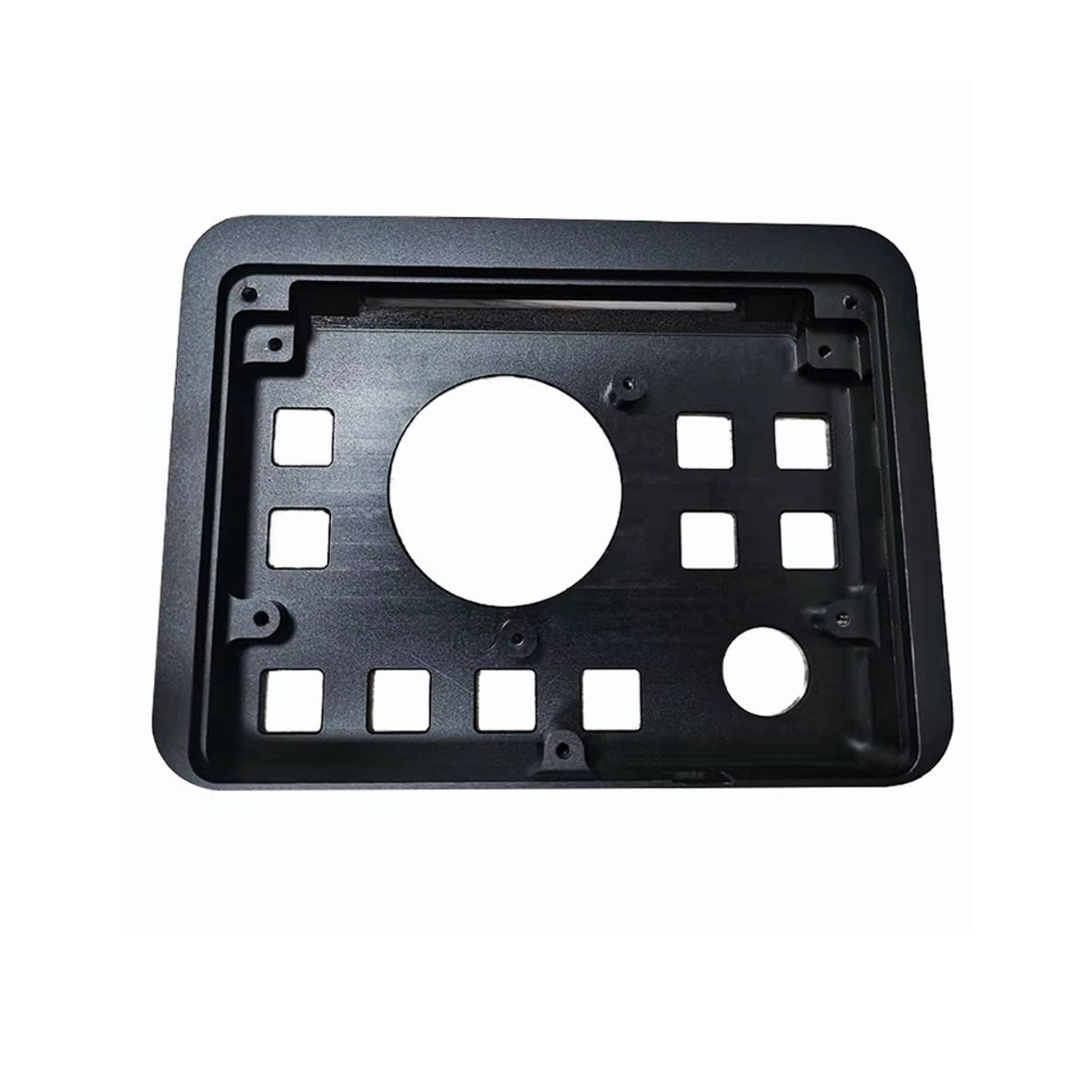


Custom Forged Aluminum Hand Controller Housing | CNC & Anodizing
| Project | Parameter |
| Processing Type | Precision forging+CNC machining |
| Design Support | 2D/3D Drawing review,Prototype Development,OEM,ODM |
| Material Capability | Aluminum alloy, copper, steel, copper alloy |
| Machining Accuracy | ±0.02mm |
| Forging Accuracy | ±10mm |
| Common Materials | 2014, 6061, 6063, 6082,7075, 7050, C1100, C1020 etc |
| Quality Control | Incoming Material, In-process, final inspection,IATF 16949 Certified,ISO 9001 Certified |
| Surface Treatment | Anodizing, sandblasting, polishing, electroplating, powder coating, blackening |
| Manufacturing Process | forging,T4 / T6 Heat Treatment,CNC machining, drilling, tapping, deburring, surface treatment,Packaging |
| Processing Equipment | forging equipment , Turn-Mill Machines, CNC lathes |
| Testing Equipment | Three coordinate inspection, NDT,hardness inspection, size inspection, Tensile Strength Testing, appearance inspection |
| Service Content | forging machining,Precision CNC Machining, surface treatment,OEM,ODM |
- Product Description
- Attributes
-
The slanted surface housing component of automated equipment operation panels is a precision-molded or precision-fabricated structural enclosure designed to serve as the front-facing interface of industrial control systems, automation consoles, operator terminals, and machine control assemblies. Based on the product image provided, this component appears to be a robust rectangular housing shell with a sloped or recessed internal layout, a large central circular opening, several smaller square and circular cutouts, and molded mounting bosses distributed around the perimeter. The geometry suggests a purpose-built enclosure part intended to support device interfaces such as pushbuttons, indicator lights, selector switches, display modules, sensor ports, or cable pass-throughs in automated equipment environments.
Unlike decorative covers, this type of housing component plays a functional engineering role. It supports structural alignment, protects internal electronics, defines the operator interface zone, and contributes to the mechanical integrity of the complete control panel assembly. The slanted face design is especially valuable in automation systems because it improves operator visibility, enhances ergonomics, and allows the panel to be mounted at a comfortable viewing angle for standing or seated users. In industrial production lines, packaging systems, process control stations, CNC machine interfaces, and embedded operation consoles, these characteristics improve both usability and reliability.
This product category is often selected for environments where machine operation demands fast recognition, direct access, and long-term durability. Equipment builders and system integrators require housing elements that are not only dimensionally stable and easy to assemble, but also resistant to vibration, dust, routine handling, and continuous industrial use. The component shown in the image aligns with those expectations: it is simple, structurally reinforced, and designed around practical mounting and interface needs rather than unnecessary visual complexity.
Product Overview
The slanted surface housing component functions as a mechanical interface frame for an automated control panel. Its primary roles include:
- providing a stable mounting base for panel-mounted devices,
- organizing the layout of operator controls and indicators,
- protecting internal wiring and subassemblies,
- creating a clean and professional external appearance,
- supporting ergonomic access to frequently used controls,
- helping maintain consistent panel geometry during assembly and service.
The part shown in the image presents a large recessed opening in the center, multiple smaller opening patterns along the left, right, and lower sections, and several molded attachment points. These features indicate that the housing is intended to accept a combination of panel hardware or to support a secondary overlay, instrument cluster, or integrated keypad/display module. The overall shape is rectangular with rounded outer corners, which is a practical choice for industrial safety, handling comfort, and manufacturability.
The sloped or recessed structure is especially useful in automated equipment because it reduces glare on display surfaces, improves line-of-sight to status indicators, and makes buttons easier to reach without awkward wrist positioning. In operational environments where technicians must interact quickly with machinery, even subtle geometry improvements can reduce user fatigue and help prevent input errors.
Visual Reference and Structural Interpretation
The provided image offers a useful snapshot of the part’s design language and likely intended function. Even without full assembly context, the following structural observations can be made.
Visible design features
Visual Element Observed Characteristic Likely Function Outer frame Rectangular profile with rounded corners Provides enclosure perimeter and impact-friendly edges Inner recess Slanted or stepped cavity Supports a protected interface area and panel depth management Central large opening Circular cutout Likely for a display, lens, dial, sensor, or major control interface Smaller square cutouts Repeated modular openings Likely for switches, status lights, button modules, or connectors Smaller round opening Auxiliary circular port May support a lock, connector, indicator, or sensor point Mounting bosses Raised internal posts and tabs Used for screws, anchors, or assembly alignment Matte black finish Uniform molded or coated surface Provides professional appearance and industrial durability The part’s black finish suggests an industrial plastic material or coated substrate intended to resist visual wear, contamination, and the appearance of scuffs. In equipment panels, matte surfaces are often preferred because they reduce reflections under factory lighting and contribute to a cleaner, more technical appearance.
Engineering Purpose of the Slanted Surface Design
A slanted surface in an equipment operation panel is not merely a cosmetic choice. It is an ergonomic and functional design strategy that improves interaction between human operators and the machine interface. Flat vertical panels are common in basic enclosures, but they can be less user-friendly when displays or controls are frequently read and operated at close range.
Benefits of a slanted surface housing
- Improved readability
A slanted surface can angle status lights, labels, screens, or gauges toward the operator’s natural line of sight. This is particularly valuable in bright industrial environments where reflections can obscure information. - Better ergonomics
Controls mounted on a sloped face are easier to press, turn, or inspect because the wrist and forearm can approach them more naturally. - Reduced visual strain
Angled surfaces reduce the need for bending, leaning, or crouching to inspect data on a control panel. - Enhanced panel organization
A slanted layout allows designers to separate high-frequency controls from secondary access points while maintaining clear visual hierarchy. - Professional industrial appearance
A sloped geometry often gives a machine interface a more refined and modern technical look, which is especially important in commercial automation products. - Protection from debris accumulation
In some configurations, angled surfaces can help discourage dust buildup or liquid pooling near interface areas.
These benefits are especially relevant in automated equipment where operators may interact with the panel repeatedly over a shift, sometimes while wearing gloves or working under time pressure.
Likely Application Areas
Although the exact end-use machine is not specified, the part is clearly suitable for a wide range of automation and industrial control settings.
Typical application environments
- automated production equipment,
- industrial control cabinets,
- machine operation panels,
- HMI housing assemblies,
- CNC machine interfaces,
- packaging and labeling machines,
- material handling and conveyor systems,
- test equipment and inspection devices,
- process automation stations,
- embedded operator consoles,
- custom OEM machine interfaces.
The modular opening arrangement shown in the image makes the component especially suitable for systems that require multiple controls in a fixed and repeatable layout. Manufacturers often want standardized interfaces that can be adapted across product families. A housing like this supports that strategy by offering a consistent structural platform while allowing the final control arrangement to vary.
Functional Layout and Interface Planning
One of the strongest clues in the image is the arrangement of cutouts. The geometry suggests a deliberate interface plan rather than a random protective shell. The large central aperture and multiple smaller square cutouts imply a modular front panel environment.
Possible interface functions by opening type
Opening Type Observed Shape Common Industrial Use Large circular opening Central round aperture Main display, rotary control, bezel, gauge, or sensor mount Small square openings Multiple repeated modules Pushbuttons, LEDs, mini switches, or indicator windows Small circular opening Auxiliary round port Lock, cable pass-through, signal connector, or indicator Bossed mounting points Internal support structures Fastening, alignment, and load transfer From a product design perspective, this layout offers several advantages. It allows machine builders to organize controls by frequency of use, function type, or operational priority. It also makes wiring and assembly more efficient, because each opening can correspond to a standardized component size. This can reduce tooling variability, improve part interchangeability, and streamline final assembly.
Material Considerations
Based on the appearance, the housing component is likely made from a high-strength industrial plastic such as ABS, PC-ABS, or a similar engineering polymer, though other materials such as sheet metal with coated finish or composite structures are also possible in this category. The exact material cannot be confirmed from the image alone, but the visual characteristics are consistent with a molded polymer enclosure.
Why polymers are often used for this type of housing
- Lightweight structure: easier to mount and integrate into equipment.
- Good moldability: complex shapes, bosses, and cutouts can be formed efficiently.
- Electrical insulation: useful in control panel environments.
- Cost efficiency: suitable for high-volume manufacturing.
- Corrosion resistance: unlike bare metal, polymers do not rust.
- Design flexibility: can incorporate ribs, clips, and internal supports.
When metal may be preferred
In some automation environments, sheet metal or cast aluminum housings are chosen instead of polymers due to higher impact resistance, EMI shielding requirements, or elevated-temperature conditions. However, for many operator-facing control panel components, engineered plastic remains a strong choice because it combines adequate strength with lower weight and easier shaping.
If the housing is a molded part, the matte finish and integrated internal bosses suggest a manufacturing process focused on repeatability and assembly convenience. If it is a fabricated or coated part, the same visual cues still indicate an emphasis on clean industrial presentation.
Structural Integrity and Mounting Design
The internal structure visible in the image is highly important. Mounting bosses, rib lines, edge flanges, and recessed support zones are the hidden engineering features that make the component suitable for real industrial use.
Structural functions of the visible features
- Perimeter frame: maintains outer shape and protects the interface area.
- Recessed inner wall: helps align internal modules and creates depth for wiring or subassemblies.
- Raised bosses: accept screws or inserts for fastening.
- Corner reinforcements: improve rigidity at stress concentration points.
- Openings distributed across the face: minimize unnecessary mass while preserving function.
In a control panel housing, structural stiffness matters because buttons, indicators, and displays often experience repeated force during operation. A flexible or poorly supported panel can cause misalignment, loosened fasteners, or premature wear. The part shown here appears to be designed with those concerns in mind.
A well-engineered panel housing must also resist vibrations from nearby machinery. Industrial equipment often operates under steady mechanical vibration, and control panels installed on machine frames, cabinets, or support arms must remain secure. The molded internal features visible in the image suggest a deliberate effort to maintain mechanical stability.
Ergonomic and Operational Advantages
The term “operation panel” indicates that the component is part of the human-machine interface. In that role, ergonomics matters almost as much as durability.
Why ergonomics are important in automation panels
Operators may interact with the panel hundreds or thousands of times per shift. Poor panel geometry can increase fatigue and reduce response accuracy. A slanted housing helps by positioning inputs in a more accessible orientation, which can:
- reduce bending at the neck and waist,
- improve visibility of labels and indicators,
- make repeated button activation less tiring,
- support faster fault diagnosis,
- reduce operator error in time-sensitive operations.
The panel can also support clearer functional zoning. For example, status indicators can be grouped separately from control buttons, and emergency or maintenance-related access points can be placed in visually distinct areas. The image suggests that this component could support such an organized layout.
Product Description for Technical Catalog Use
The Slanted Surface Housing Component for Automated Equipment Operation Panels is a precision-designed enclosure element intended for use in industrial automation systems, machine consoles, and operator interface assemblies. Featuring a sloped inner face, a rigid rectangular outer frame, and multiple modular cutouts, the housing provides a practical foundation for integrating displays, pushbuttons, indicators, sensors, and accessory components into a unified control interface.
The component is engineered to support ergonomic operation and reliable structural performance. Its slanted surface improves visibility and accessibility, while its reinforced perimeter and internal mounting features support stable installation and long-term durability. The clean black finish delivers a professional industrial appearance suitable for OEM equipment, production machinery, and custom-built control stations.
With its carefully arranged apertures and secure mounting architecture, the housing is well suited to systems requiring standardized interface layouts, compact panel integration, and repeatable assembly. It is especially appropriate for automated equipment where operator efficiency, visual clarity, and mechanical reliability are essential.
Manufacturing and Assembly Considerations
Components like this are often designed with manufacturing efficiency in mind. The shape suggests a part that could be produced through injection molding, precision thermoforming, or fabrication with secondary finishing operations depending on material and production volume.
Manufacturing priorities for this category
- precise cutout alignment,
- repeatable wall thickness,
- strong boss geometry for screw fastening,
- clean surface finish for visual quality,
- dimensional stability after assembly,
- compatibility with standard hardware modules.
When a panel housing must accept multiple devices, tolerances become especially important. Even small deviations in opening placement can create assembly issues, such as misaligned switches, gaps around indicators, or stress on mounted electronics. A well-designed housing must therefore balance manufacturing practicality with interface accuracy.
Assembly sequence considerations
- Prepare the shell and inspect the cutouts for dimensional accuracy.
- Install inserts, clips, or threaded hardware if required.
- Route wiring or subassemblies behind the front interface.
- Mount control modules into the designated openings.
- Secure the housing to the machine frame or console structure.
- Verify alignment, actuation clearance, and visual readability.
- Perform final fastener torque checks and functional testing.
This type of component should be easy to assemble, service, and replace. In industrial equipment, maintainability is critical because downtime can be expensive. A modular housing design makes it easier to replace a damaged front panel or upgrade the internal interface without rebuilding the entire machine console.
Performance Characteristics Expected in Industrial Use
A high-quality operation panel housing must satisfy a range of performance criteria. Even when these are not directly visible in a photograph, they define the value of the component.
Expected performance attributes
Performance Area Engineering Expectation Relevance to Automation Equipment Dimensional stability Maintains shape under use Ensures control alignment and fit Impact resistance Resists bumps and handling damage Important in factory environments Vibration tolerance Remains secure during machine operation Prevents loosening or misalignment Surface durability Resists scratches and wear Preserves appearance and readability Environmental tolerance Handles dust and routine cleaning Supports industrial maintenance cycles Assembly repeatability Consistent mounting and interface layout Reduces production errors Ergonomic usability Supports accessible operator interaction Improves efficiency and comfort In many automation systems, a component like this must also work in conjunction with gaskets, seals, protective membranes, or secondary cover layers. Depending on the final design, the housing may be part of a larger enclosure solution that includes electromagnetic shielding, water resistance, or dust protection.
Design Language and Industrial Aesthetics
Industrial product design is not only about mechanics. Appearance matters because equipment front panels communicate quality, professionalism, and technical maturity to operators, technicians, and end customers. The provided image shows a component with a restrained and functional aesthetic.
Design qualities visible in the part
- matte black industrial finish,
- balanced rectangular proportions,
- smooth rounded external corners,
- purposeful geometric cutout pattern,
- visually consistent recess depths,
- no unnecessary ornamentation.
This design language works well in automation equipment because it reinforces reliability and seriousness. It also helps the part integrate with a wide range of machine colors, cabinet finishes, and brand identities. A neutral black housing can blend into professional environments while still looking modern and technical.
Detailed Feature Breakdown
1. Rigid perimeter frame
The outer frame forms the main load-bearing structure of the component. Rounded corners help reduce stress concentration and improve safety during handling and installation.
2. Slanted internal face
The sloped center area is ideal for operator-facing controls. It supports better visibility and makes the interface more intuitive during active machine use.
3. Multi-opening layout
The combination of round and square cutouts suggests a modular interface strategy. This is useful when the final panel arrangement needs to support several different devices.
4. Internal bosses and supports
Raised posts and reinforced points help secure the panel to a larger housing or accept fasteners during assembly.
5. Matte surface finish
A non-gloss surface reduces glare, hides minor wear, and presents a clean industrial appearance.
6. Compact enclosure profile
The relatively shallow housing depth helps it fit into tightly packaged machine designs where space efficiency is important.
Comparison Table: Why This Type of Housing Is Preferred
Design Option Advantages Limitations Flat panel cover Simple and inexpensive Less ergonomic, weaker visual depth Fully enclosed box Strong protection Less accessible for operator controls Slanted surface housing Best balance of ergonomics and visibility Requires more design coordination Modular front bezel Easy to customize May need secondary supporting structure For many automation systems, the slanted surface housing is the optimal middle ground. It offers better operator interaction than a flat plate and greater usability than a sealed box that is not intended for direct access.
Applications in Custom Equipment Builds
This housing type is especially attractive for custom machine builders because it can be adapted to different control philosophies. For example:
- A packaging machine may use the large center opening for a main display and the smaller cutouts for start/stop and fault indicators.
- A test bench may use the opening pattern for switches, status lights, and connector access.
- A conveyor controller may use the panel for mode selection, speed adjustment, and alarm indication.
- A specialized OEM system may reserve the central aperture for a touchscreen or instrument window.
The value of the component lies in its flexibility. It can serve as the structural basis for a highly specialized interface while maintaining a standardized form factor that simplifies sourcing and production.
Technical Selling Points
Core advantages
- ergonomic slanted interface geometry,
- modular cutout arrangement for multiple controls,
- robust structural frame for industrial use,
- clean black finish for professional equipment styling,
- suitable for panel-mounted automation controls,
- easy integration into OEM machine designs,
- supports better operator visibility and accessibility,
- compact form for space-conscious equipment layouts.
Value to equipment manufacturers
- simplifies control panel design,
- helps standardize machine interface architecture,
- improves user experience,
- supports product family consistency,
- reduces interface redesign effort,
- contributes to a more premium equipment presentation.
Recommended Audience
This product is best suited for:
- industrial equipment manufacturers,
- automation system integrators,
- control panel fabricators,
- machine tool builders,
- OEM enclosure suppliers,
- maintenance and retrofit teams,
- custom console designers,
- production equipment development engineers.
These users need reliable structural components that can be integrated into a larger control system with minimal redesign risk. The part’s geometry and layout make it a strong candidate for both new development and replacement applications.
Example Use Scenario
Imagine a production machine that requires a compact but operator-friendly control interface. The machine must provide start, stop, mode selection, system status, and alarm monitoring in a single front-facing station. A slanted housing component like the one shown can serve as the front panel structure. The central circular opening may accommodate a display or a main rotary control, while the smaller square openings can house pushbuttons or indicator modules. The lower circular opening may support a secondary function such as a key switch, connector port, or alarm reset point.
Because the panel is angled toward the operator, status information is easier to read at a glance. Because the face is organized into modular openings, the machine builder can standardize the layout across multiple models. Because the body is rigid and reinforced, the panel maintains alignment during vibration and repeated use. In this way, a seemingly simple housing component becomes an essential part of the equipment’s usability and reliability.
Final Product Description
The Slanted Surface Housing Component of Automated Equipment Operation Panels is a professionally engineered enclosure element designed to support the front-end structure of industrial control systems. Its slanted face improves operator visibility and ergonomics, while its rigid rectangular frame and modular cutout arrangement provide a dependable foundation for integrating displays, switches, indicators, and other panel-mounted devices. The part shown in the image presents a clean black industrial finish, internal mounting bosses, and a carefully organized set of openings that suggest compatibility with a range of automation and machine control applications.
This component is ideal for equipment manufacturers seeking a practical, durable, and visually refined interface solution. It supports efficient assembly, stable mounting, and organized operator access while contributing to a modern technical appearance. In production environments where clarity, speed, and reliability matter, the housing serves as more than a structural shell—it becomes the functional interface between the machine and the operator.
By combining ergonomic slant geometry, modular design flexibility, and industrial-grade construction principles, this housing component delivers the qualities expected in professional automation equipment: performance, serviceability, and long-term mechanical integrity.
Summary Table
Item Description Product Name Slanted surface housing components of automated equipment operation panels Category Industrial enclosure / operator panel housing Primary Function Supports control interface modules and improves ergonomics Geometry Slanted internal face with rectangular outer frame Cutouts Central circular opening, multiple square openings, secondary round opening Visual Finish Matte black industrial appearance Typical Use Automation systems, machine panels, OEM equipment consoles Key Benefit Better accessibility, visibility, and structural organization -
Project Parameter Processing Type Precision forging+CNC machining Design Support 2D/3D Drawing review,Prototype Development,OEM,ODM Material Capability Aluminum alloy, copper, steel, copper alloy Machining Accuracy ±0.02mm Forging Accuracy ±10mm Common Materials 2014, 6061, 6063, 6082,7075, 7050, C1100, C1020 etc Quality Control Incoming Material, In-process, final inspection,IATF 16949 Certified,ISO 9001 Certified Surface Treatment Anodizing, sandblasting, polishing, electroplating, powder coating, blackening Manufacturing Process forging,T4 / T6 Heat Treatment,CNC machining, drilling, tapping, deburring, surface treatment,Packaging Processing Equipment forging equipment , Turn-Mill Machines, CNC lathes Testing Equipment Three coordinate inspection, NDT,hardness inspection, size inspection, Tensile Strength Testing, appearance inspection Service Content forging machining,Precision CNC Machining, surface treatment,OEM,ODM
Rapid lead times starting from just 1 business day.
ISO 9001,ISO 14001,IATF 16949 and AS9100D Certification.
Over 100 materials available, with 50+ surface finish options.
Cost-effective mass production.
Order as low as 1 piece.
Next:

LCW Manufacturing
China
No. 1, Jinyuan 3rd Road, Xinqiao Third Industrial Zone, Shajing, Bao'an District, Shenzhen City, 518100
Contact
1-202-754-5941
Click to copy13418743212
Click to copyforging@lcwcnc.com
Click to copy